1.Executive Summary
Welcome to your official adventurer's briefing for Rome. Rome is a spectacular collision of ancient imperial glory, Renaissance mastery and bustling modern chaos. This report gives you the deep historical context, the essential marble-clad sights, and the calorie-dense tavern fuel required for a proper Roman expedition.
2.The Layers of History
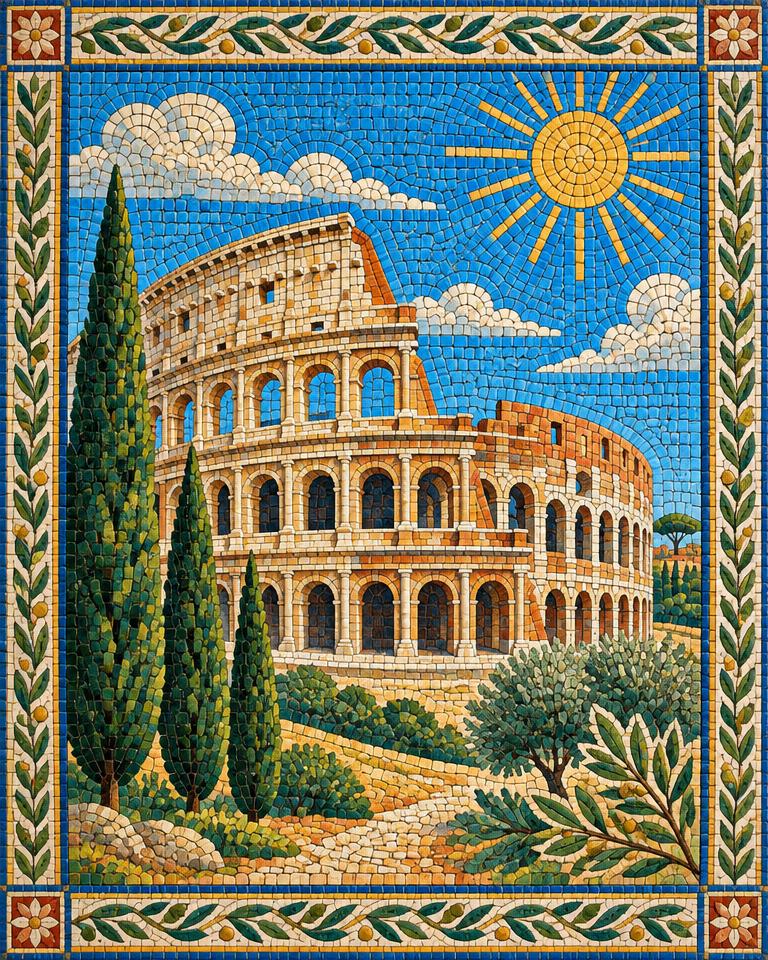
Rome has a history that reads like the blueprint for western civilisation, beginning deep in mythology. The city was famously founded in 753 BC by Romulus and Remus, twin brothers raised by a she-wolf. It quickly blossomed from a small Latin settlement into a formidable Republic, eventually conquering the Mediterranean.
In the first century AD, Rome became a major centre of the growing Christian movement.Saint Peter, tradition says, was crucified upside down on Vatican Hill under Nero in the AD 60s; Saint Paul was beheaded just outside the walls, traditionally at Tre Fontane. Their traditionally identified remains are venerated beneath St Peter's and St Paul's respectively, two of the four papal basilicas, and the city the apostles died in went on to run the largest church in history from their graves.
The Apostles’ Relics: A Basilica-by-Basilica List
Rome’s churches preserve an extraordinary network of apostolic tombs and relics. Here are the principal documented Roman traditions, including small bone relics as well as burial shrines. “Attributed to” matters: centuries of veneration do not independently prove a bone’s identity, and not all the apostles died in Rome or have their bodies here.
Saint Peter
Built c. AD 319–333 under Constantine · rebuilt 1506–1626
Martyrdom: c. AD 64–68 · Present basilica: 1506–1626
The tomb beneath the papal altar marks Peter’s traditionally venerated burial place on Vatican Hill; bones identified by the Church as his are associated with the excavated shrine. The basilica is in Vatican City, within the Rome visitor’s circuit.
Saint Paul
Founded c. AD 324 · enlarged 384–392 · rebuilt 1825–1854 after the 1823 fire
Martyrdom: c. AD 64–68 · First basilica: consecrated AD 324
A sarcophagus beneath the papal altar is venerated as Paul’s tomb. This is his burial shrine on the Via Ostiense, not the traditional execution site at Tre Fontane. Paul was an apostle, though not one of the original Twelve.
Saint Simon the Zealot
Present basilica built 1506–1626 over Constantine’s 4th-c. church
Apostolic ministry: 1st c. AD · Death and Roman relic-arrival dates uncertain
Relics traditionally attributed to Simon are venerated beneath the Altar of St Joseph in the basilica’s left transept, together with those of Jude. This is a relic tradition, not evidence that Simon died in Rome.
Saint Jude Thaddeus
Present basilica built 1506–1626 over Constantine’s 4th-c. church
Apostolic ministry: 1st c. AD · Death and Roman relic-arrival dates uncertain
Jude’s traditional relics share the altar with Simon’s. The Church of San Salvatore in Lauro also keeps an arm relic attributed to Jude; that church is a separate stop, not another basilica tomb.
Saint Philip
First church mid-6th c. · rebuilt after the 1348 quake · rebuilt 1702–1724
Apostolic ministry: 1st c. AD · Traditional relic transfer to Rome: 6th c. AD
Relics attributed to Philip are kept in the crypt with those attributed to James the Less, traditionally transferred to Rome in the sixth century. Despite its name, this basilica does not contain the bodies of all Twelve.
Saint James the Less
First church mid-6th c. · rebuilt after the 1348 quake · rebuilt 1702–1724
Apostolic ministry: 1st c. AD · Traditional relic transfer to Rome: 6th c. AD
James the Less shares the crypt shrine with Philip; he is not James the Greater of Compostela. A scientific caution: a sampled femur attributed to James was dated to AD 214–340 in a 2021 study, too late to be his. The shrine’s tradition and the identification of that particular bone are different questions.
Saint Bartholomew
Built c. AD 998–1000 under Otto III · restored 1644–1657
Apostolic ministry: 1st c. AD · Roman shrine established: c. AD 998–1000
The Tiber Island basilica venerates remains attributed to Bartholomew beneath its high altar, traditionally brought to Rome under Emperor Otto III around the end of the tenth century. Benevento also claims his remains, so this is a contested relic tradition rather than an independently established identification.
Saint Matthias
Built AD 432–440 under Sixtus III · façade 1741–1750
Chosen as an apostle: c. AD 30–33 · Basilica built: AD 432–440; relic arrival uncertain
Relics attributed to Matthias, chosen to replace Judas Iscariot, are traditionally kept in the porphyry urn forming the base of the high altar. Trier in Germany also preserves a major Matthias relic tradition. Matthias and Matthew are different apostles — the similar names do not make this easier.
Saint Matthew
Built AD 432–440 under Sixtus III · façade 1741–1750
Apostolic ministry: 1st c. AD · Basilica built: AD 432–440; Roman relic arrival uncertain
The Vatican’s Jubilee guide also lists remains of Matthew among this basilica’s relics. His principal tomb tradition is in Salerno, however: do not mistake the Roman relic claim for a claim that his whole body is here, or confuse him with Matthias.
Saint Thomas
Built c. AD 320–325 in Helena’s palace · rebuilt 1144 · façade 1741–1744
Traditional martyrdom: c. AD 72 · Basilica founded: 4th c. AD; finger relic arrival uncertain
The basilica lists a joint of a finger attributed to Thomas in its Chapel of the Relics, traditionally associated with the apostle who asked to touch Christ’s wounds. This is a small bodily relic, not Thomas’s tomb; his principal Italian shrine is in Ortona. Check the basilica’s notice before visiting the chapel, as access can close for building works.
Another Peter-and-Paul stop: 7St John Lateran venerates relics traditionally identified as the heads of Peter and Paul above its papal altar. These are separate relic claims, not additional apostles. Its dedication to John the Baptist and John the Evangelist does not mean their bodies are buried there.
And the other apostles? Andrew’s head relic, formerly at St Peter’s, was returned to Patras in 1964; his major Italian shrine is in Amalfi. James the Greater’s principal tomb tradition is in Santiago de Compostela, and John’s is associated with Ephesus. A church dedication or a statue is not a bone relic, and this list does not pretend to inventory every small fragment in Rome’s private reliquaries.
Historical cross-check: the 2021 scientific study of the Philip and James shrine.
During the Imperial period, Rome transformed into a metropolis of marble, engineering marvels and monumental architecture. Emperors like Augustus, Trajan and Hadrian built the Colosseum, the Pantheon and sprawling aqueducts that cemented its status as the caput mundi (capital of the world), until the Western Roman Empire collapsed in 476 AD.
By AD 500 the city was paying dearly for its earlier glories. The Visigoths under Alaric sacked Rome in 410 — the first time since the Gauls eight centuries earlier — and the Vandals did it again, more thoroughly, in 455. The Gothic War of the 530s and 540s finished the job: eighteen sieges in two decades left the aqueducts cut, the population starved, and a metropolis of a million people reduced to a few tens of thousands herding goats among the ruins, with Pope Gregory the Great negotiating with invaders because there was no emperor left to do it.
Around AD 1000, Rome was a strange, half-ruined town punching far above its weight. On Christmas Day in 800, Charlemagne was crowned emperor in St Peter's, and for centuries afterwards popes and emperors fought over who got to crown whom — the Investiture Controversy made Rome the chessboard of Europe. Meanwhile the city itself was a warren of fortified noble towers, muddy streets and pilgrim hostels, where sheep grazed on the Forum and the population kept sinking, in medieval Rome, to barely 20,000 — yet every pilgrim who arrived to walk the stations and kiss the basilicas brought coins, ideas and the beginnings of the tourist economy Rome runs on today.
The defining chapter of Rome's artistic identity began in the Renaissance and exploded during the Baroque period. The Papacy, operating out of the Vatican, commissioned heavyweights like Michelangelo, Raphael, Bernini and Borromini to transform the city. For centuries, they overlaid the ancient ruins with grandiose piazzas, towering basilicas and theatrical fountains.
2Castel Sant’Angelo
Begun around AD 135 and completed in AD 139, Hadrian’s mausoleum became a fortress and later a papal refuge. The fortified Passetto di Borgo connects it to the Vatican; today its terraces overlook the Tiber and the bridge lined with angel statues. Find it on Google Maps.
In 1870, Rome was captured by Italian forces, ending Papal rule and becoming the capital of a unified Italy. The 20th century added yet another layer, with Mussolini carving wide boulevards through ancient neighbourhoods. Today, Rome proudly wears its millennia of triumphs and scars, functioning as a modern European capital built directly on top of the world's most spectacular archaeological dig.
3.Top 4 Things to See
- 5The Colosseum & Roman Forum
Amphitheatre opened AD 80 · Forum rebuilt 7th c. BC – 3rd c. AD
The brutal, brilliant heart of the ancient empire: gladiator games in the Flavian Amphitheatre, then the surviving columns of Rome's political and commercial epicentre.
- 3The Pantheon
Built by Agrippa, rebuilt under Hadrian c. AD 125
The best-preserved building of ancient Rome, with the world's largest unreinforced concrete dome and an open oculus to the sky.
- 1Vatican City & St Peter's Basilica
Basilica 1506–1626 · Sistine ceiling 1508–1512
The world's smallest independent state: Renaissance and Baroque grandeur inside the basilica, and Michelangelo's ceiling at the end of the Vatican Museums.
- 4Trevi Fountain
Completed 1762
A Baroque masterpiece that fills its tiny piazza — toss a coin over your left shoulder, then admire the travertine gods.
4.Top 6 Things to Eat
- Supplì
Roman street food, 19th c.
Torpedo-shaped fried rice croquettes with beef ragù and a molten mozzarella core that stretches like a telephone cord.
- Spaghetti alla Carbonara
First recorded c. 1950
Egg yolks, Pecorino Romano, black pepper and rendered guanciale — emulsified into cream with no cream allowed.
- Carciofi alla Giudia
Roman Jewish Ghetto, 16th c.
Globe artichokes fried whole until the leaves shatter like potato chips and the heart turns tender.
- Coda alla Vaccinara
19th-c. quinto quarto cooking
Oxtail braised low and slow in tomatoes, wine, pine nuts and raisins until the meat melts off the bone.
- Roman Gelato
16th-c. court recipes · modern gelaterias from the 1950s
Gelato the Roman way: dense, cold-churned and judged by whether the pistachio is the colour of a pistachio and not of toothpaste. The queue outside a Pantheon or Trastevere gelateria is the real review.
- Roman Pizza by the Cut
Baked by the metre, early 20th c.
Thin, blistered slabs of dough sold by weight and chopped with scissors — potato and rosemary, or mortadella and pistachio — eaten walking, ideally before you have committed to lunch.
5.Final Dispatch
Rome is a city where you can eat a pistachio cornetto in a modern café, spend your morning tracing the footsteps of Julius Caesar, admire a Michelangelo fresco by afternoon, and watch the sun set over the Tiber with a glass of local Frascati wine. It requires comfortable walking shoes, an appetite for relentless carbohydrates, and an appreciation for a city that has spent 2,800 years refusing to be ignored.