ITALIAN ODYSSEY ATLAS

Roman ruins, Renaissance masterpieces & la dolce vita

Site by Dan Vineyard — images and site © 2026

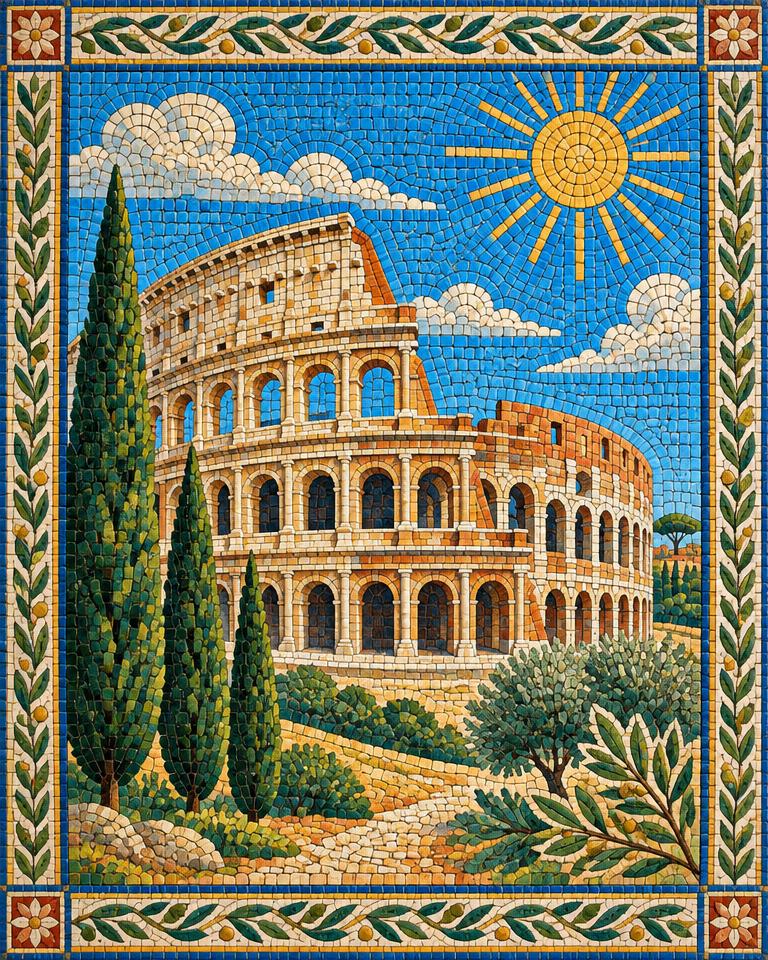
Mosaic for Rome
Central ItalyLazio, Italy

01.Rome

Rome was founded, legend says, by Romulus in 753 BC, and for a thousand years it ruled an empire from Britain to Mesopotamia. You can still stand in the Forum where Caesar was stabbed in 44 BC, look up into the 43-metre concrete dome of the Pantheon, rebuilt under Hadrian around AD 125, and walk the arena of the Colosseum, which held some 50,000 spectators. Across the Tiber, Vatican City holds St Peter's Basilica and Michelangelo's Sistine Chapel ceiling, painted 1508–12. Finish with a coin in the Trevi Fountain and a plate of cacio e pepe in Trastevere.

Top 3 to see

  1. I.Colosseum

    Opened AD 80

    Flavian amphitheatre for gladiator games and animal hunts.

  2. II.Pantheon

    Rebuilt c. AD 113–125

    Temple with the world's largest unreinforced concrete dome.

  3. III.Sistine Chapel

    Ceiling 1508–1512

    Michelangelo's ceiling and Last Judgment inside the Vatican.

Top 3 to eat

  1. I.Cacio e pepe

    Shepherd dish, centuries old

    Pasta with pecorino Romano and black pepper, nothing else.

  2. II.Carbonara

    First recorded c. 1950

    Egg, guanciale, pecorino and pepper; no cream.

  3. III.Supplì

    Roman street snack, 19th c.

    Fried rice ball with a molten mozzarella centre.
Mosaic for Florence
Central ItalyTuscany, Italy

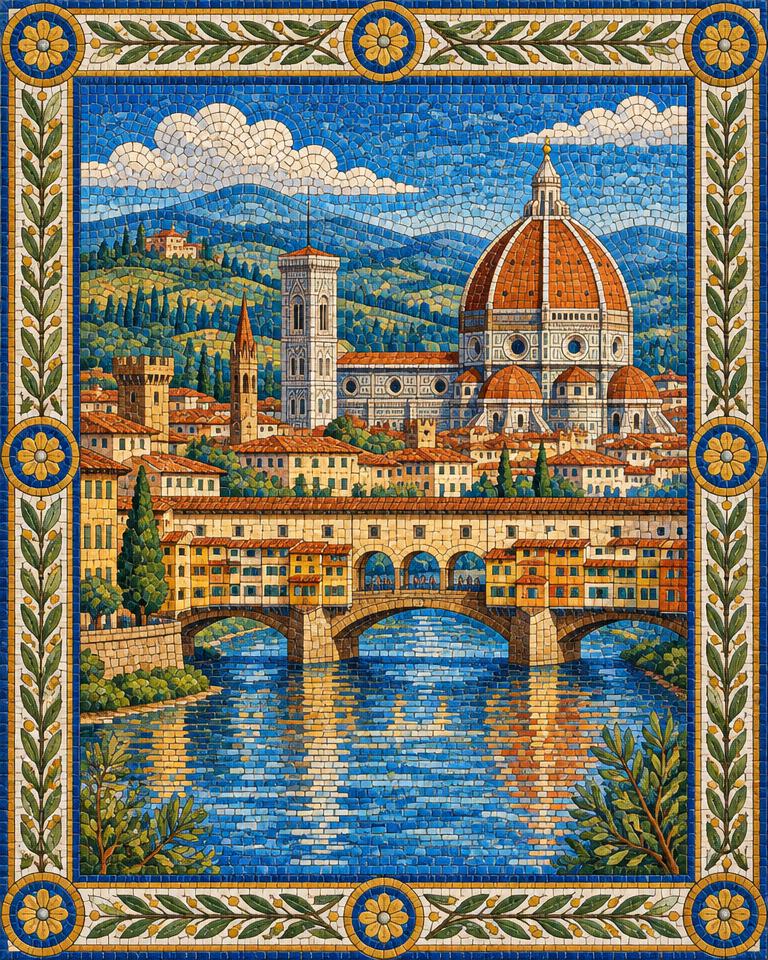
Florence is where the Renaissance was born. Under the Medici bankers in the 1400s, the city paid for Brunelleschi's dome on the cathedral, completed in 1436 without scaffolding from the ground, and for the paintings of Botticelli, Leonardo and Michelangelo. The Uffizi, built as Medici offices in 1560, now holds The Birth of Venus, while the Accademia keeps Michelangelo's 5-metre David, carved 1501–04. Cross the Ponte Vecchio, still lined with goldsmiths as it has been since 1593, then climb to Piazzale Michelangelo for sunset over the red-tiled roofs.

Top 3 to see

  1. I.Florence Cathedral dome

    Dome 1420–1436

    Brunelleschi's brick dome; 463 steps to the top.

  2. II.Uffizi Gallery

    Built 1560–81

    Botticelli, Leonardo, Raphael and Caravaggio under one roof.

  3. III.Michelangelo's David

    Carved 1501–1504

    The original marble giant, in the Galleria dell'Accademia.

Top 3 to eat

  1. I.Bistecca alla fiorentina

    Tradition from the Medici era

    Thick T-bone steak grilled rare over wood coals.

  2. II.Ribollita

    Peasant soup, medieval roots

    Bread, bean and black-cabbage soup, reboiled to thicken.

  3. III.Lampredotto sandwich

    Street food since 15th c.

    Slow-cooked tripe in a bun with green sauce.

Mosaic for Venice
Northern ItalyVeneto, Italy

03.Venice

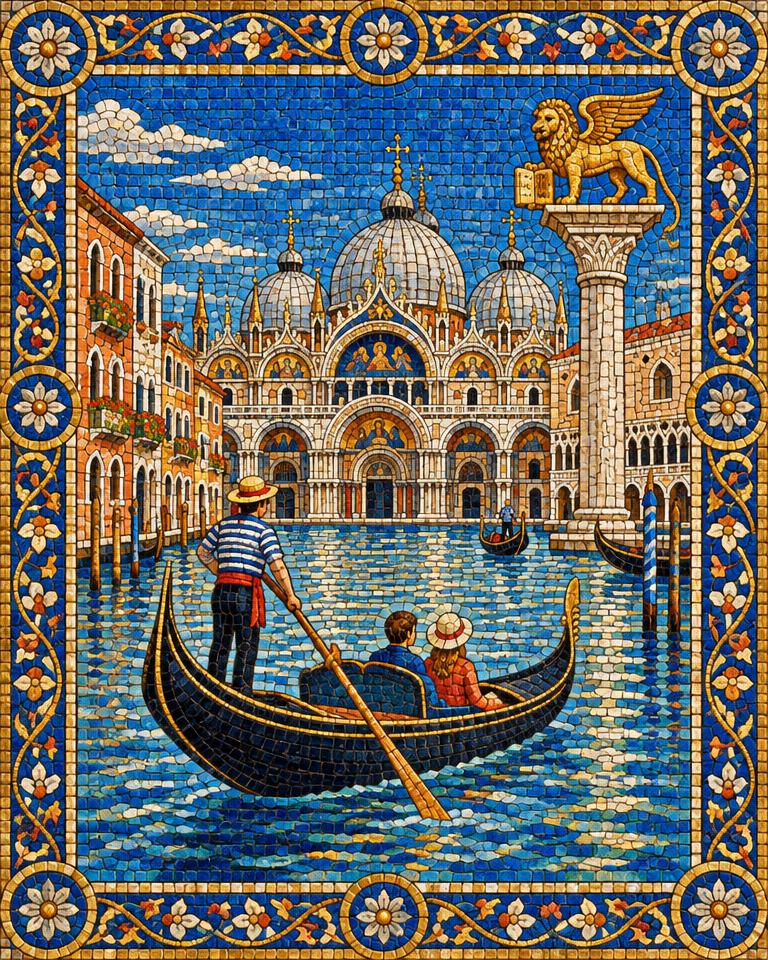
Venice is a city of 118 small islands in a lagoon, built on millions of wooden piles by people fleeing mainland invasions after the fall of Rome. For a thousand years the Venetian Republic was a trading superpower, and its wealth shows in St Mark's Basilica, covered with more than 8,000 square metres of gold mosaics, and the pink-and-white Doge's Palace next door. There are no cars: you travel by vaporetto down the Grand Canal or on foot over some 400 bridges. Take a boat to Murano for glassblowing and Burano for its painted houses, then eat cicchetti standing up at a bàcaro.

Top 3 to see

  1. I.St Mark's Basilica

    Consecrated 1094

    Byzantine-style church glittering with gold mosaics.

  2. II.Doge's Palace

    Gothic form 1340–1420s

    Seat of Venice's rulers, linked to the Bridge of Sighs.

  3. III.Grand Canal

    Palaces 12th–18th c.

    Venice's main street; best seen from vaporetto line 1.

Top 3 to eat

  1. I.Sarde in saor

    Sailors' dish, 14th c.

    Sweet-and-sour sardines with onions, raisins and pine nuts.

  2. II.Risotto al nero di seppia

    Lagoon tradition

    Black risotto made with cuttlefish ink.

  3. III.Tiramisù

    Created 1960s–70s, Veneto

    Coffee-soaked ladyfingers layered with mascarpone.

Mosaic for Milan
Northern ItalyLombardy, Italy

04.Milan

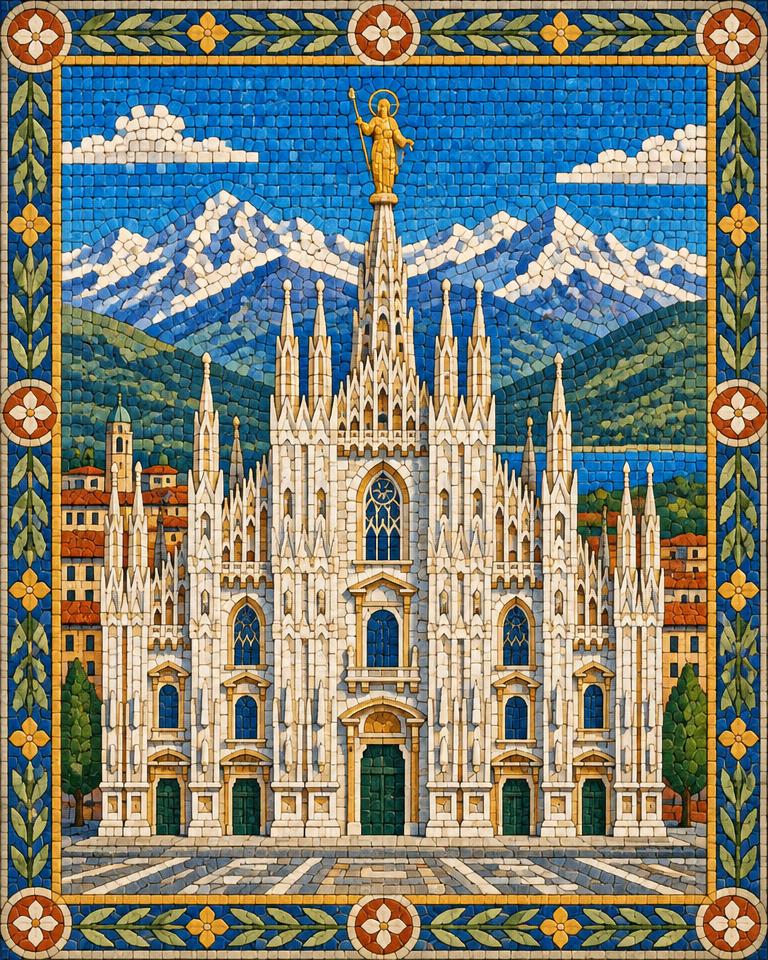
Milan was Mediolanum, a capital of the Western Roman Empire, where Constantine issued the Edict of Milan in AD 313 granting tolerance to Christians. Its cathedral, the Duomo, took nearly six centuries to finish (1386–1965) and carries some 3,400 statues; you can walk on its marble roof among the spires. Leonardo da Vinci worked here for the Sforza dukes and painted The Last Supper (1495–98) on a refectory wall at Santa Maria delle Grazie, which you must book weeks ahead. Today it is Italy's capital of fashion and design, with opera at La Scala since 1778.

Top 3 to see

  1. I.Milan Cathedral (Duomo)

    Built 1386–1965

    Vast Gothic cathedral with a walkable rooftop of spires.

  2. II.The Last Supper

    Painted 1495–1498

    Leonardo's mural in Santa Maria delle Grazie; book ahead.

  3. III.Teatro alla Scala

    Opened 1778

    The world's most famous opera house, with a museum.

Top 3 to eat

  1. I.Risotto alla milanese

    Recorded by 1809

    Golden saffron risotto made with beef marrow.

  2. II.Cotoletta alla milanese

    Documented 1134

    Breaded, butter-fried bone-in veal cutlet.

  3. III.Panettone

    Milanese, by 15th c.

    Tall sweet bread with candied fruit, eaten at Christmas.

Mosaic for Genoa
Northern ItalyLiguria, Italy

05.Genoa

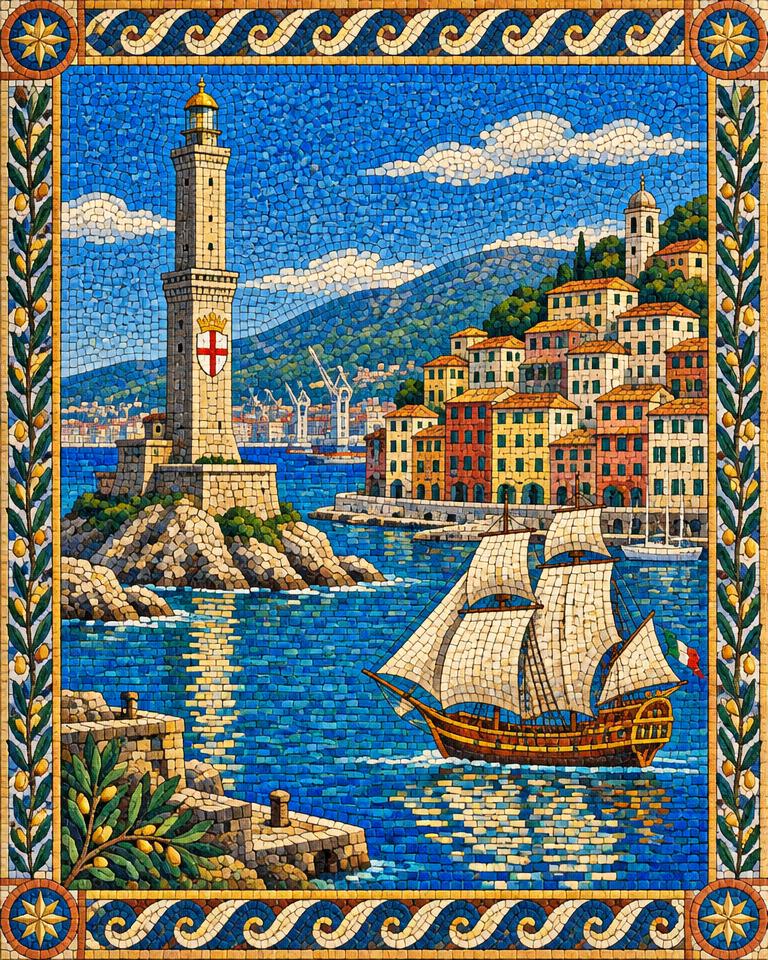
Genoa was 'La Superba', a maritime republic that rivalled Venice, founded trading colonies from Crimea to the Aegean and became the banker of Spain's empire. Christopher Columbus was born here around 1451. Its medieval centre is one of Europe's largest, a maze of narrow alleys called caruggi, while the Strade Nuove of the 1500s are lined with merchant palaces now protected by UNESCO. The Lanterna lighthouse, rebuilt in 1543, still guards the port, where Renzo Piano's aquarium sits in the old harbour. Genoa is also the home of pesto and the gateway to Portofino and the Cinque Terre.

Top 3 to see

  1. I.Palazzi dei Rolli & Strade Nuove

    16th–17th c.

    UNESCO street of grand merchant palaces on Via Garibaldi.

  2. II.Lanterna di Genova

    Rebuilt 1543

    77-metre lighthouse, symbol of the city and its port.

  3. III.Aquarium of Genoa

    Opened 1992

    Italy's largest aquarium, in the restored old harbour.

Top 3 to eat

  1. I.Pesto alla genovese

    Recorded by 1860s

    Basil, pine nuts, garlic, Parmigiano and Ligurian olive oil.

  2. II.Focaccia genovese

    Ligurian staple for centuries

    Oily, salty flatbread dimpled by fingertips.

  3. III.Farinata

    Medieval street food

    Thin chickpea-flour pancake baked in a wood oven.

Mosaic for Naples
Southern ItalyCampania, Italy

06.Naples

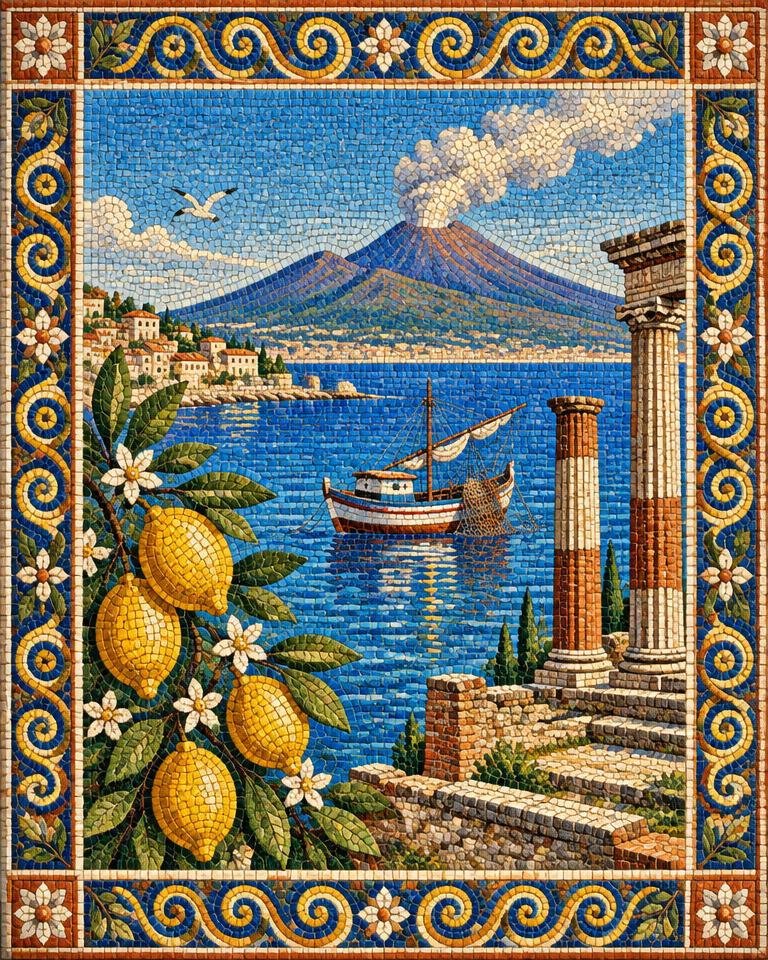
Naples began as Neapolis, the 'new city' founded by Greek colonists around 600 BC, and its grid of streets in the historic centre still follows their plan. Above it looms Vesuvius, which buried Pompeii and Herculaneum in AD 79; the finest mosaics and frescoes from both are in the National Archaeological Museum, including the Alexander Mosaic. Go underground into Greek and Roman tunnels at Napoli Sotterranea, see the veiled Christ sculpture in the Sansevero Chapel, and eat pizza where it was invented. Day trips reach Pompeii, the Amalfi Coast and the island of Capri.

Top 3 to see

  1. I.Pompeii

    Buried AD 79

    Roman town frozen by Vesuvius; streets, homes and frescoes.

  2. II.National Archaeological Museum of Naples

    Museum 1777; finds 1st c.

    Treasures from Pompeii, including the Alexander Mosaic.

  3. III.Napoli Sotterranea

    Greek tunnels c. 470 BC

    Ancient cisterns and passages 40 metres below the streets.

Top 3 to eat

  1. I.Pizza margherita

    Named 1889

    Tomato, mozzarella and basil; Naples' gift to the world.

  2. II.Sfogliatella

    Created 17th c.

    Crisp shell-shaped pastry filled with sweet ricotta.

  3. III.Babà

    Neapolitan by 19th c.

    Rum-soaked yeast cake, a café favourite.